
Backflow Prevention Testing in Brooklyn by a Licensed Master Plumber
Ariel Services, Inc. provides backflow prevention testing for property owners and managers across Brooklyn, keeping buildings compliant with New York City DEP requirements.
Led by Ariel Mizrahi, NYC Licensed Master Plumber #2402, and a member of the Master Plumbers Council of the City of New York.
Backflow Prevention Testing Services
Backflow prevention devices protect a building’s water supply from contamination by stopping water from flowing in the wrong direction. New York City requires these devices to be tested annually, with the results filed with the Department of Environmental Protection.
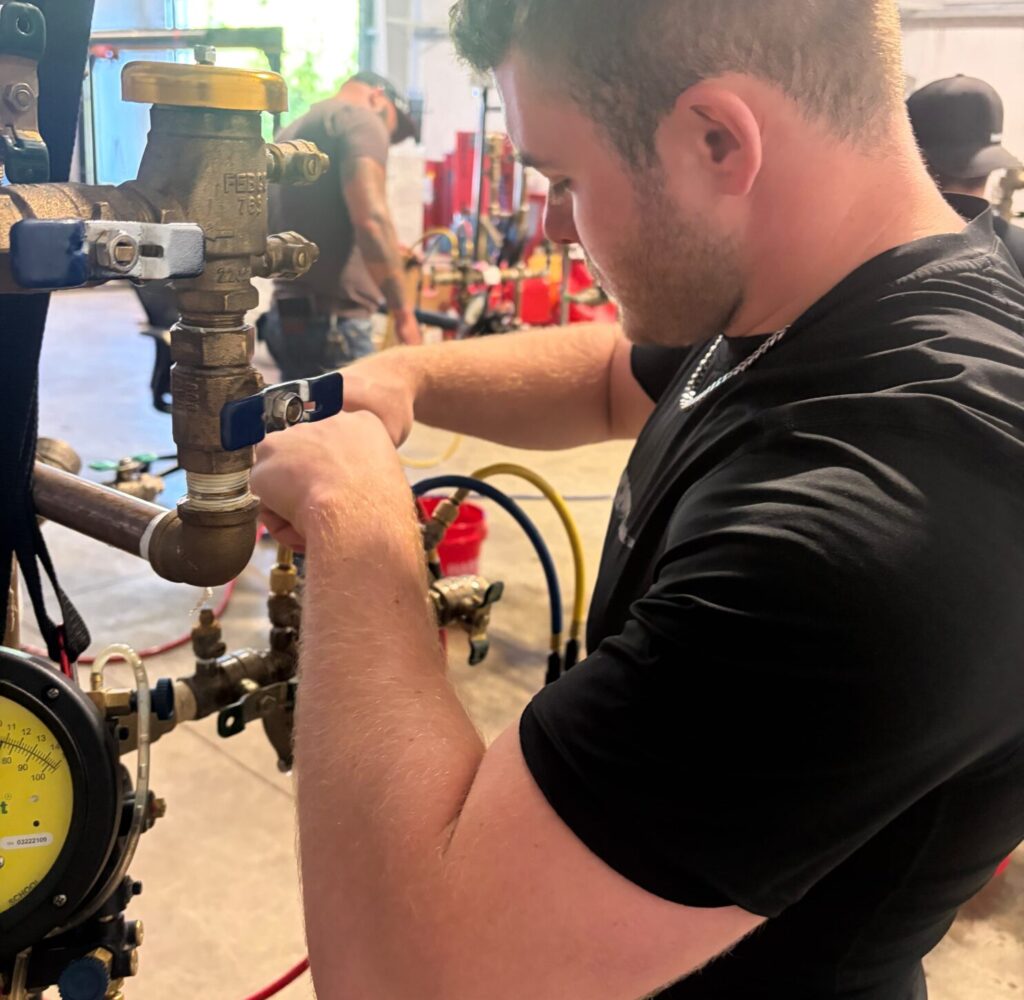
Our team tests, repairs, and installs backflow prevention devices, including double check valve assemblies (DCVA), reduced pressure zone (RPZ) valves, and pressure vacuum breakers (PVB), for buildings across Brooklyn, filing the required GEN215B documentation with the DEP.
A backflow device that fails its annual test needs to be repaired or replaced before it can pass. We handle the full process, from testing through filing, so the building stays compliant.
Which Buildings Need Backflow Prevention Testing?
Buildings with certain water system connections, including many with fire sprinkler systems, boilers with chemical treatment, or connections that pose a contamination risk to the public water supply, are required to have a backflow prevention device tested annually. The Department of Environmental Protection typically notifies building owners when their annual test is due.

Backflow Prevention Testing in Brooklyn: Local Considerations
Commercial corridors like Fifth Avenue in Park Slope and Fulton Street in Bedford-Stuyvesant and Clinton Hill mix ground-floor retail and restaurant space with residential units above, and that kind of mixed-use connection is exactly the situation that often requires a backflow prevention device.
Older apartment buildings across neighborhoods like Flatbush and Sunset Park may have backflow devices that have been in place for years, making annual testing especially important for catching wear before it causes a failed test.
Because Brooklyn’s water infrastructure serves a dense mix of building types, from century-old rowhouses to new waterfront towers, the Department of Environmental Protection treats backflow compliance as a citywide priority regardless of a building’s age or location.
Frequently Asked Questions
Backflow prevention testing checks that a device designed to stop contaminated water from flowing back into the public water supply is working correctly.
New York City requires backflow prevention devices to be tested annually, with results filed with the Department of Environmental Protection.
A failed device needs to be repaired or replaced and then retested before it can pass and be filed as compliant.
Our team tests, repairs, and installs double check valve assemblies (DCVA), reduced pressure zone (RPZ) valves, and pressure vacuum breakers (PVB).
Yes. Ariel Services, Inc. provides backflow prevention testing for buildings across Brooklyn, including Brooklyn Heights and surrounding neighborhoods.